

Editor's Note: This article was first published in the July, 2026 edition of The Vine. If you are already familiar with alpha-gal, you can skip the first few paragraphs and scroll down to the step-by-step shopping and cooking guide below.
In retrospect, it was probably inevitable that I would wind up with alpha-gal syndrome (AGS, also referred to as alpha-gal). I spend as much time as I can outdoors, tending a large garden and taking daily walks with my husband. Last summer, I was careful — but not careful enough. And then one day in August I unknowingly walked through a nest of lone star nymphs, which are baby ticks the size of a poppyseed, at Quansoo. Later that week I woke up in the middle of the night with hives all over my body. I went to see my doctor, had the blood test and soon knew what I already suspected. I had alpha-gal. (See “What is Alpha-Gal?,” below.)
At first I thought, “No problem. I can handle this.” (“This” being a diet containing no meat products.) I’ve been a food writer and recipe developer for 30 years, and I was a vegetarian for several years. Giving up red meat was doable. I was thankful that fish, chicken and other poultry — not to mention eggs — were still on the menu. (An alpha-gal diet is not a vegan diet, despite being mislabeled as such in the media.) Cutting out dairy, especially cheese and ice cream, did strike me as tragic, but I thought redeveloping some of my vegetarian recipes without dairy would be a fun challenge. Not all alpha-gal folks react to dairy (see below), but I do.
Hidden Mammalian Ingredients
My early confidence soon turned to bewilderment. What I hadn’t anticipated — or ever given much thought to — was how many processed foods contain hidden mammalian ingredients. Even if your diet is mostly whole foods, you’ll soon discover that your fridge and pantry (and even your medicine cabinet) contain potential alpha-gal landmines. Some — lard in tortillas, gelatin in marshmallows — are easy to identify. Others not so much. Bone char (from cattle) is used to filter white sugar; gelatin can be used as a filter in winemaking; chicken sausages can be wrapped in pork casings; enriched flour, sandwich bread and breakfast cereals can contain lanolin-derived Vitamin D3 or dough conditioners derived from pigs.
Most mysterious of all is an ingredient listed simply as “natural flavors.” Those two words show up on many ingredient lists, and you have no way of knowing whether those flavors are animal- or vegetable-derived. The FDA does not require distinguishing between the two. You can only be sure that “natural flavors” are entirely vegetable-derived when you buy a certified organic vegan product.
In response to the growing number of people with alpha-gal in the U.S. (now an estimated 450,000), there is currently a bill before Congress to require labeling of all mammalian ingredients. But until that bill passes, we have to be vigilant.
Alpha-gal in Seaweed? The Culprit is Carrageenan
Even more confounding to me was the discovery that the alpha-gal molecule can also reach you through a non-mammalian food source. Namely, seaweed. Certain types of red seaweed contain a compound called carrageenan, which is widely used as an emulsifier and stabilizer in dairy alternatives and other foods, including some jams. It is even used to plump up commercial rotisserie chicken. Most annoying — it’s in many plant milks. Carrageenan is composed of sugar molecules, including alpha-gal.
I began to realize that my new “diet” was going to be more complicated than I first thought. I knew I needed a strategy. It’s taken me a while to hone that strategy (and I’ve eaten a lot of hummus along the way!), but it boils down to two key components: maintaining an alpha-gal-friendly pantry and planning ahead.
And now I’m able to pass along my tips to you if you’ve got alpha-gal — and to connect you with a collection of alpha-gal-friendly recipes on cookthevineyard.com.
THE GUIDE — A plan to take you from the store to the stove.

1. Start at the grocery store
✦ Shop the perimeter of the store. Steer clear of the middle, where processed foods can hide additives that might activate an alpha-gal reaction. Stick to whole foods whenever possible.
✦ Check labels. When you do purchase packaged goods, always check the ingredient labels, not only for dairy, but for gelatin, carrageenan, natural flavors and gums (which can also be irritants).
✦ Download the Fig app, which quickly scans barcodes to tell you if there is an ingredient in a product that you shouldn’t eat. You can customize the app so that it identifies all of your allergies. It’s not perfect, but it is helpful.
✦ Be aware of cross-contamination. Don’t buy freshly sliced turkey meat at the deli, where ham may have just been on the slicer. (FYI, deli turkey can contain carrageenan.)
✦ Choose a plant butter (optional). I steered away from plant butter until a friend told me about Melt brand. I tried it and I found that it did behave like butter when sautéing. Now I use it for cooking eggs and for certain pan sauces. Bakers with alpha-gal recommend Earth Balance for baking. Be sure to check ingredient lists: some plant butters contain carrageenan and/or natural flavors. Most are also high in saturated fat, due to coconut and palm oil. So you’ll want to use them sparingly.
✦ Pick up a variety of oils. You’re probably already using healthy oils in your cooking, but you might want some variety. Avocado oil is very nutritious and has a high smoke point. Grapeseed oil is neutral-tasting and is also good for high-heat cooking. Keep one good extra-virgin olive oil for dressings and a lighter olive oil for cooking. Refined coconut oil (neutral flavor) is a good choice for frying and pie dough. Unrefined coconut oil adds a slight coconut flavor to a rice or noodle dish.
✦ Settle on a plant milk. I started out with Oatly brand oat milk, which contains nothing but oats and water. Later I switched to soy milk for its high protein content. But I had to hunt for a brand that did not contain thickeners, natural flavors or added sugars — and that was locally available. I eventually found two: EdenSoy unsweetened organic soy milk at Cronig’s Market and West Life organic unsweetened plain soy milk at Stop & Shop.
✦ Try other non-dairy products. While carrageenan also shows up in non-dairy ice creams and yogurts, there are high-quality options on-Island that don’t have it. I like Cocojune Organic Cultured Coconut (Morning Glory Farm and Cronig’s), and friends love Coconut Cult cultured yogurt (North Tisbury Farm). Award-winning Rebel (cashew-based) cheese (North Tisbury Farm) gets raves as does Monty’s brand cashew cream cheese (Morning Glory Farm). I also love Talenti Dairy-Free Sorbetto Cold Brew Coffee (Cronig’s).

Ginger-Scallion Turkey Patties with Sriracha Mayo
✦ Shop for high-protein staples:
— Tinned fish. Canned tuna, sardines, mussels and salmon are not only super-high in protein, but they are, of course, shelf-stable. So they’re great in an emergency. If you don’t think you like them, try a few of the higher end brands in flavorful marinades. And use tuna creatively. I don’t love traditional tuna salad, but for lunch I now make a Mediterranean-style tuna salad with sundried tomatoes, olives, arugula, crunchy chickpeas and a Lemon-Tahini Vinaigrette. Delicious.
— Snacks. Healthy, alpha-gal-friendly (shelf-stable) snacks include roasted nuts and pistachios, roasted edamame, crunchy chickpeas and some crackers. (Crunchmaster brand is safe and tasty; many crackers contain butter or natural flavorings). In the fridge? Fruit, of course, and the almighty hummus. (Be aware that not all hummus is alpha-gal-friendly.)
— Whole grains. Having a variety of whole grains in the pantry is key, because you can cook a batch on Sunday and use them in breakfast and lunches throughout the week. Wheatberries, farro and short-grain brown rice are my favorites, but quinoa cooks in only 15 minutes. Oats are essential too. Quick-cooking oats are great for overnight oats. Steel-cut oats are more nutritious; you can cook them ahead, divide into portions and reheat.
— Chickpeas and beans. If you don’t like canned chickpeas, try roasting them to transform their flavor and texture. They don’t stay crisp for long, so keep a stash of store-bought crispy chickpeas, as well, to add crunch and protein to salads and grain dishes. (I like Biena brand.) Chickpeas also make excellent veggie burgers. We all know how versatile canned beans are. It’s summer, so start making bean salads and veggie tacos.
— Eggs. Unless you’re vegan, you’ll find eggs a boon to your alpha-gal meal plan. My go-to breakfast has evolved to be a Japanese-style egg pancake with scallions or spring onions, thinly sliced cabbage or kale, chopped cilantro (if I have it), a dash of sesame oil and soy sauce and a drizzle of chili crisp to finish.
— Tofu. Tofu is very high in protein. A tofu scramble is an excellent sub for eggs. Try roasting extra-firm tofu on a sheet pan with veggies for an easy dinner. Most tofu is additive-free, but check labels.
— Poultry. I’m sorry to say that you’ll be eating a lot of chicken, so buy extra for the freezer. It’s very high in protein; cook extra for lunches if you can. Ground turkey is now a weeknight staple in our house. We make turkey meat patties with Sriracha dipping sauce (see photo on page 20). Look for Applegate Farms chicken and turkey sausages; they don’t have pork casings. North Tisbury Farm is making alpha-gal-friendly chicken sausage this summer. Treat yourself to duck every once in awhile. Ostrich and emu are not yet available on the Island.
✦ Stock up on flavor boosters. Ingredients that are high in umami will taste better and help you feel satisfied.
— Jar stars. Ingredients that add umami include sundried tomatoes, olives, miso, dried mushrooms (and powder), soy sauce, fish sauce, nut and seed butters, some (safe) Asian condiments and nutritional yeast (a delicious cheese substitute). I am obsessed with tahini, which makes everything feel richer and taste better. I use it in sauces and marinades for chicken and fish, and drizzle it on roasted vegetables.
— Alliums. Garlic, shallots, onions, and leeks lend the background note in many delicious dishes. I use caramelized onions or leeks as a pizza topping in place of cheese. ✧ “Meaty” vegetables. Mushrooms are deeply flavorful and high in protein. Eggplant, roasted or grilled, can be at the center of the plate.
— Vegetables as condiments. Buy tomatoes for roasting, zucchini for quick-pickling, peppers for salsa.
2. Shop local
If you’re on the Vineyard, take advantage of the availability of fresh vegetables, fruit, fish and other artisan products by shopping at farm stands, farmers markets and local seafood outlets.
✦ Consider a CSA (Community Supported Agriculture) share from Morning Glory Farm or Island Grown Initiative. Or buy a membership at Ghost Island Farm. Weekly vegetable hauls will spur your creative vegetable cooking.
✦ Hit the alpha-gal-friendly farm stands. North Tisbury Farm has made a point of stocking as many high-quality alpha-gal-friendly products as possible, from duck bacon to chocolate and cheese. North Tabor Farm outfits their farm stand with a variety of alpha-gal-friendly foods. Morning Glory Farm has a fridge for alpha-gal-friendly items. Beetlebung Farm has alpha-gal-friendly baked goods, including brownies.
✦ Buy locally made bread to avoid the additives that come with commercial bread. During the summer, sources include Morning Glory Farm, Beetlebung Farm and Iggy’s. North Tisbury Farm and Ghost Island Farm carry Maison Villatte from Falmouth.
✦ Consider the Martha's Vineyard Fishermen’s Preservation Trust’s CSF (Community Supported Fish) program. Freshly caught fish is flash-frozen, so you can stock your freezer and pull from your stash anytime. If you can’t commit to monthly pickups, visit their booth at the Farmers’ Market.
✦ Eat more fish and shellfish, regardless. It can be expensive, but be creative: Buy a smaller portion of fish and combine it with other proteins for a satisfying meal. Mussels and clams are still reasonable. And the freezer section of a seafood market will have fish stock, chopped clams and frozen fish for a lower price. When all else fails, barter!

3. Plan your meals
✦ Cook ahead. Commit to making two things ahead on Sunday; it will make all the difference during the week. Make a batch of your favorite salad dressing or dip, cook a pot of grains, roast tomatoes, caramelize onions, make pesto.
✦ Double up. Make enough dinner to have a half-portion leftover. That’s the base for tomorrow’s lunch. Make a vegetable-filled frittata (without the dairy) for breakfast and take half of it for lunch. Grill extra chicken.
✦ Lean into what’s fresh at market. If it’s peas, try adding sugar snap peas to several different meals during the week. They won’t be around in a couple weeks so don’t worry about overdosing. Cooking with seasonal food will make your meals feel special.
✦ Adjust your favorite recipes with substitutions. Use mushrooms (cooked until brown and almost chocolatey) and smoked paprika in place of bacon in a soup or pasta. Add a spalsh of plant milk to pan sauces; use canned coconut milk in place of cream in any sauce or soup recipe. Sub ground turkey (87 or 93 per cent lean) in for ground beef.
✦ Accommodate your meat eaters, but keep things safe. Start by making an alpha-gal-friendly meal, which you can then add cheese or cooked meat to. (Don’t reverse engineer.) Separate cooking equipment used for meat. If you grill, use one half of the grill for meat only. Some alpha-gal folks (like me) react to meat fumes. (Alpha-gal molecules are not destroyed by heat). We don’t cook red meat inside. When we grill, we make sure smoke doesn’t drift back inside.
✦ Consider a dietician. If you have other allergies or are having trouble reaching a balanced alpha-gal diet, Vineyard Nutrition (Prudence Levy MS, RDN, LDN and Josh Levy MS, RDN, LDN) is an excellent resource.
✦ Get recipe inspiration. Check out our alpha-gal-friendly recipe collection. And subscribe to our newsletter at substack.cookthevineyard.com. Every week we highlight alpha-fal friendly recipes (among other seasonal recipes, of course!)
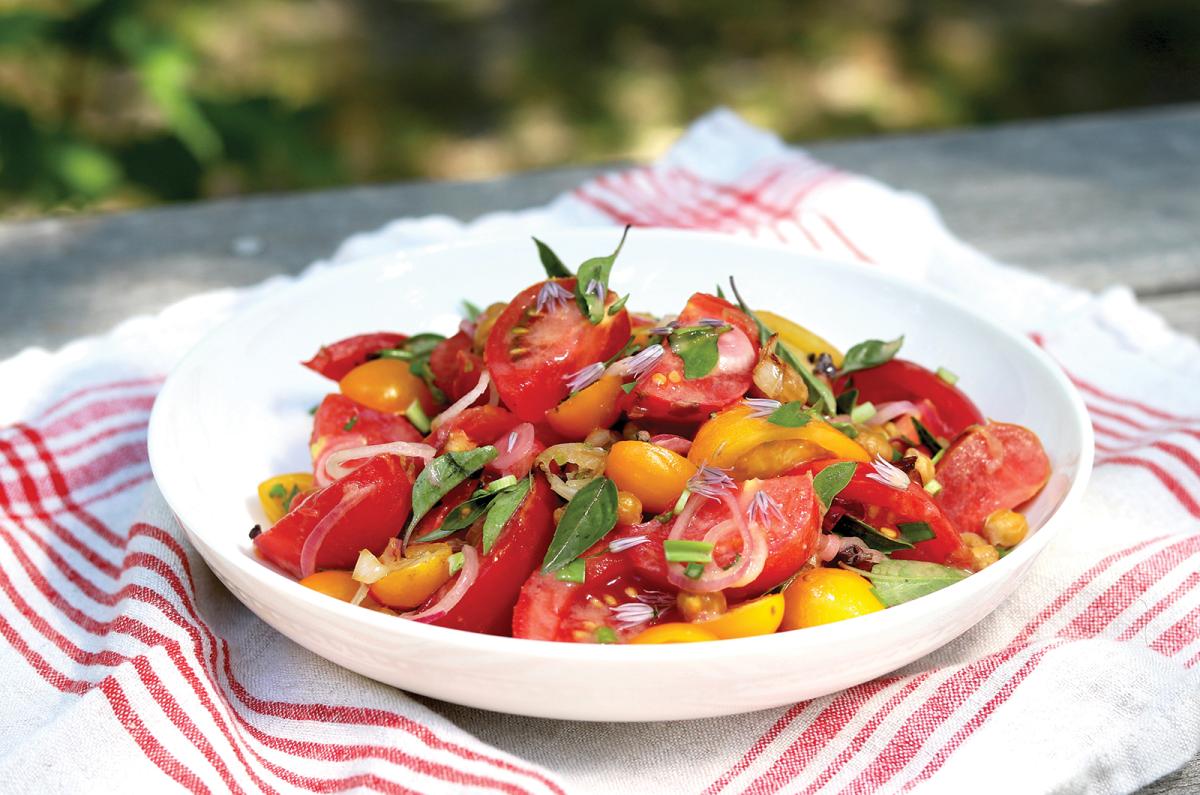
Tomato Salad with Chickpeas, Quick-Pickled Red Onions, Herbs & Lemon-Tahini Vinaigrette
___________________________
What is Alpha-Gal?
Alpha-Gal Syndrome (AGS, commonly referred to as alphagal) is an allergy to foods derived from mammals, caused by a bite from a tick that carries a sugar molecule known as alpha-gal (short for galactose-alpha-1,3-galactose). In the U.S., alpha-gal usually arrives via the lone star tick. There is currently no cure or approved treatment — other than abstinence from mammalian products — for AGS.
Because humans are the only mammals (other than apes) that don’t carry the alpha-gal molecule, when alphagal enters the human blood stream via saliva from a tick bite, it sets off alarms. Antibodies form to protect us from the intruder. When the intruder shows up again (in a nice juicy steak or bowl of ice cream), those antibodies go into overdrive, causing allergic reactions that range from gastrointestinal distress to severe hives to respiratory issues and anaphylaxis. The severity of reactions varies widely from person to person and even from event to event. Some people who’ve been infected with alpha-gal don’t react at all. Many people do not react to dairy. (Experts think 10 to 50 percent of folks react to dairy.) But that still leaves many people who react to most mammalian products, from the obvious (beef, pork, lamb) to the hidden (see above).
Susie Middleton is editor of The Vine and Cook the Vineyard and the author of four vegetable cookbooks.