Growing up, we rarely had dessert. My mother, a good cook, yearned for a salty snack and a drink before dinner and needed nothing afterward. Since she did the cooking, she set the menus. Things were different at my grandparents’ house on Lambert’s Cove – that’s where we spent the best weeks of every summer. Perhaps it was because meals were treated as occasions during our stay. Or, more probably, it was in deference to my grandmother who was indifferent to foods that weren’t sweet. Whatever the reason, there was always something sugary offered after dinner. I mostly didn’t care – that is, unless the last course was pie.
Aside from shortbread in December, my family didn’t bake, so we bought our pies. My grandfather was partial to lemon meringue from the old Humphreys Bakery in West Tisbury. I liked blueberry, which we got from Morning Glory Farm in Edgartown. In the years since, I have continued to buy pies from local cooks – Olivia Pattison’s honey pie was a favorite – but I am always thrilled when a friend bakes. That’s what Claudia Fleming did one August.
It was scorching when she and her husband, chef Gerry Hayden, visited us on the Island, so we adopted a Spanish approach to dining, eating after 10 p.m. As I remember it, Claudia would make dough in the morning. We’d spend the day near the water, then as the sun sank, while I messed with dinner, she’d roll pastry and macerate fruit, pulling dessert from the oven an hour before we sat down. I can still picture her, deft and swift, prepping and baking each night. It seemed remarkable to me.
I got to know Claudia in 1990. After practicing law, I knew I wanted to take my life in another direction, so I enrolled in the French Culinary Institute. I met Claudia at my first restaurant job, working in “garde manger” at the newly opened Tribeca Grill in New York. She was the assistant pastry chef and, like me, a bit older than most of the crew. She’d spent her early twenties working in restaurants, but she had been in the “front of the house,” supporting a career in dance. By the time that we connected, she’d left behind her aspirations of the stage and committed to cooking.
Claudia and I stayed in touch after I left Tribeca to run the pasta station at Union Square Café and she headed to France to “stage.” Four years later we wound up together again, working for famed chef Tom Colicchio on the opening team at Gramercy Tavern. I was on the “line” and pregnant so didn’t last long, but Claudia was the pastry chef and stayed. That’s where she established her culinary voice – and when the James Beard Foundation named her America’s best pastry chef.
Claudia and Gerry’s visit to Martha’s Vineyard was years later. We’d changed. After my daughter was born, I took a job as an editor at Saveur magazine. That led my old boss Tom Colicchio to hire me to help him write his first cookbook, then another. Collaborating with Tom, and then other chefs, shaping their knowledge for the page (while learning) was very satisfying, and so I continued to do book work. Claudia and Gerry remained in the restaurant world but wound up leaving the city. They moved to Long Island where they opened the North Fork Table & Inn, a casual dining room with serious food (and a few beds upstairs). Their hard work and tremendous talent turned that place into a jewel. Then Gerry got ALS. By the summer they stayed with us, he was in a wheelchair.
Looking back, I believe Claudia baked as a gift to us, but also because she needed to busy her practiced hands. Our holiday together made a strong impression on me. I thought about it after Gerry died, and as I helped Claudia turn her recipes into a book: Delectable: Sweet & Savory Baking (Random House, 2022). I made a special point of probing my memories as we tested pies. In the end, I recognized that while I will never match her mastery, I had learned how to turn out a tasty crust.
Putting what I gleaned together, I’ll begin by saying that Claudia distinguishes between pies and tarts. Their crusts (something she is very picky about) are distinct. While both types of dough start off with the same components (flour combined with fat), the goals are different. American pies – single- or double-crusted filled pastries – have flaky crusts, in this harkening back to English baking traditions. Tarts, on the other hand, have roots in France and Italy and boast single crusts that crumble. Tart doughs, known as short crust pastries (pâte brisée and pâte sucrée in French gastronomy), generally have higher ratios of flour to fat.
Whether she wants flaky or crumbly crust, Claudia usually uses butter (rather than lard or shortening) and keeps it cold. She dices it, chills it, then massages it into the dry ingredients with her fingers. The aim is to evenly coat tiny bits of fat with flour. Using your hands gives you better control, but a food processor will also work.
A pie baker has two goals at this stage: to keep his or her butter from melting and fully integrating with the flour, and to minimize gluten development. Gluten is a protein in wheat flour that moves from flexible to rubbery when “activated.” An important binder in crust, when it is overworked, gluten makes baked goods chewy – think bread. To counteract this, Claudia limits the amount she handles doughs and rests hers repeatedly, when the butter and flour are combined, then again after she rolls out her pastry.
Another secret to great crust – pie or tart – is choosing the right pan. Tarts are ideally baked in a straight-sided metal tin with a removable bottom. Metal conducts heat quickly, which makes for a crisp crust, and once pulled from the oven, it cools fast, which limits steaming. Short crust pastry is sturdier than pie dough and shrinks little during baking. Tarts maintain their structure both in the oven and once cooled and the pan’s sides are removed.
Because the dough is softer and more prone to shrinkage during baking, an angled-edged tin is the best choice for pies. The shape provides support during cooking and keeps contraction to a minimum. Also, the incline makes it easy to serve pie – most tidily sliced in the dish it is cooked in. Claudia’s favorite pan is a slope-sided metal tin she inherited from her mother. A Pyrex glass dish is another fine choice, as it heats and cools almost as quickly. Though ceramic pans look pretty, they are best reserved for crumbles and cobblers.
As you might expect, Claudia’s repertoire goes beyond basics. At times she adds eggs to dough for richness, or ground nuts for flavor, or swaps in an additional fat, such as cream cheese, for a little tang. And because she loves textural variety, she often finishes pastries with a crumbly topping. Focusing on fillings, at Gramercy she offered a tart loaded with white chocolate–espresso cream, another filled with pine nuts in a rosemary-infused caramel, and a stunner made with a French triple-crème cheese custard, always adding just enough sweetness to bring out other flavors. She does the same at home, though there she usually reaches for fruit – berries, peaches, then plums and apples (either one at a time or in a combination) – to fill her crusts.
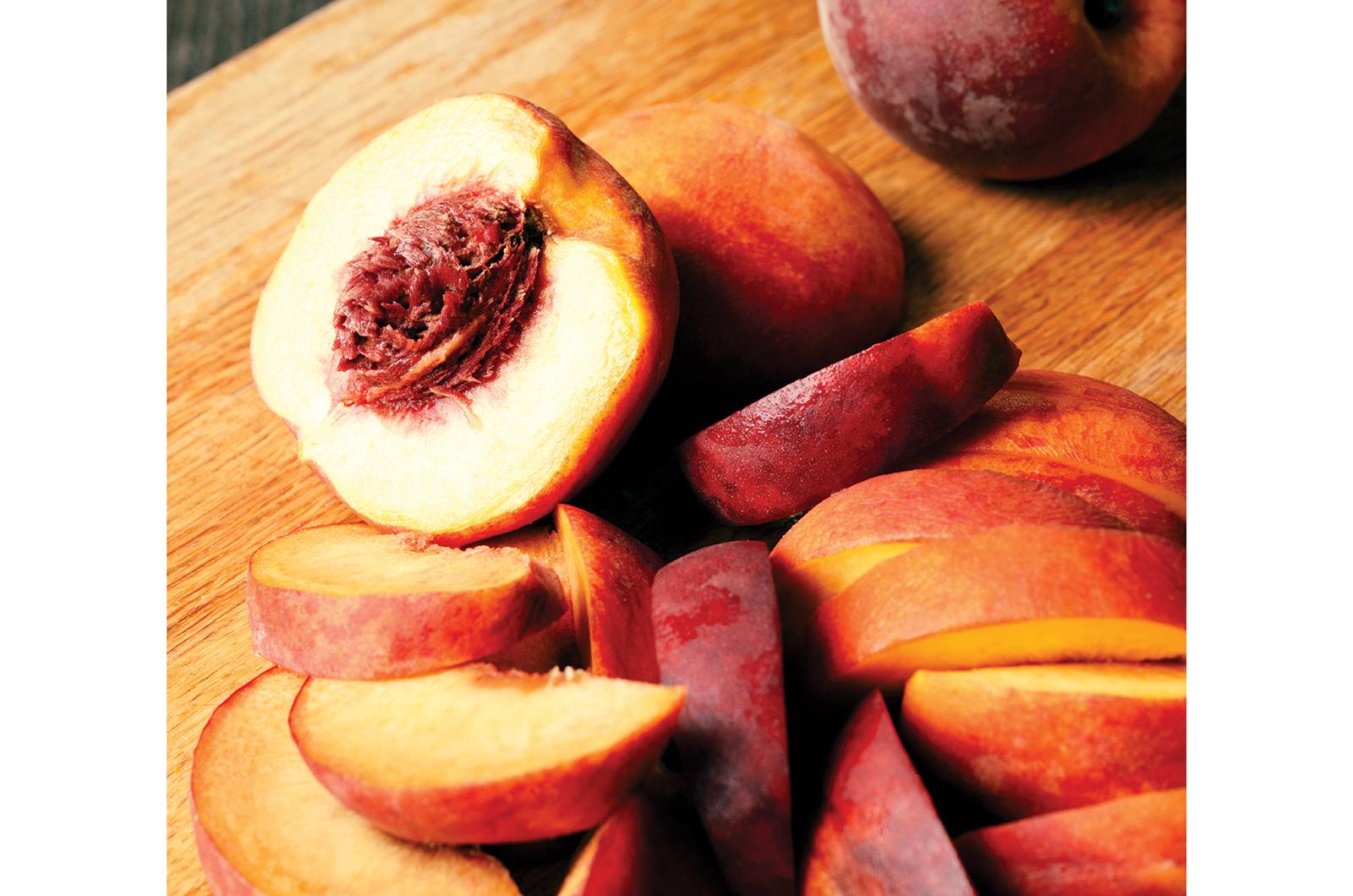
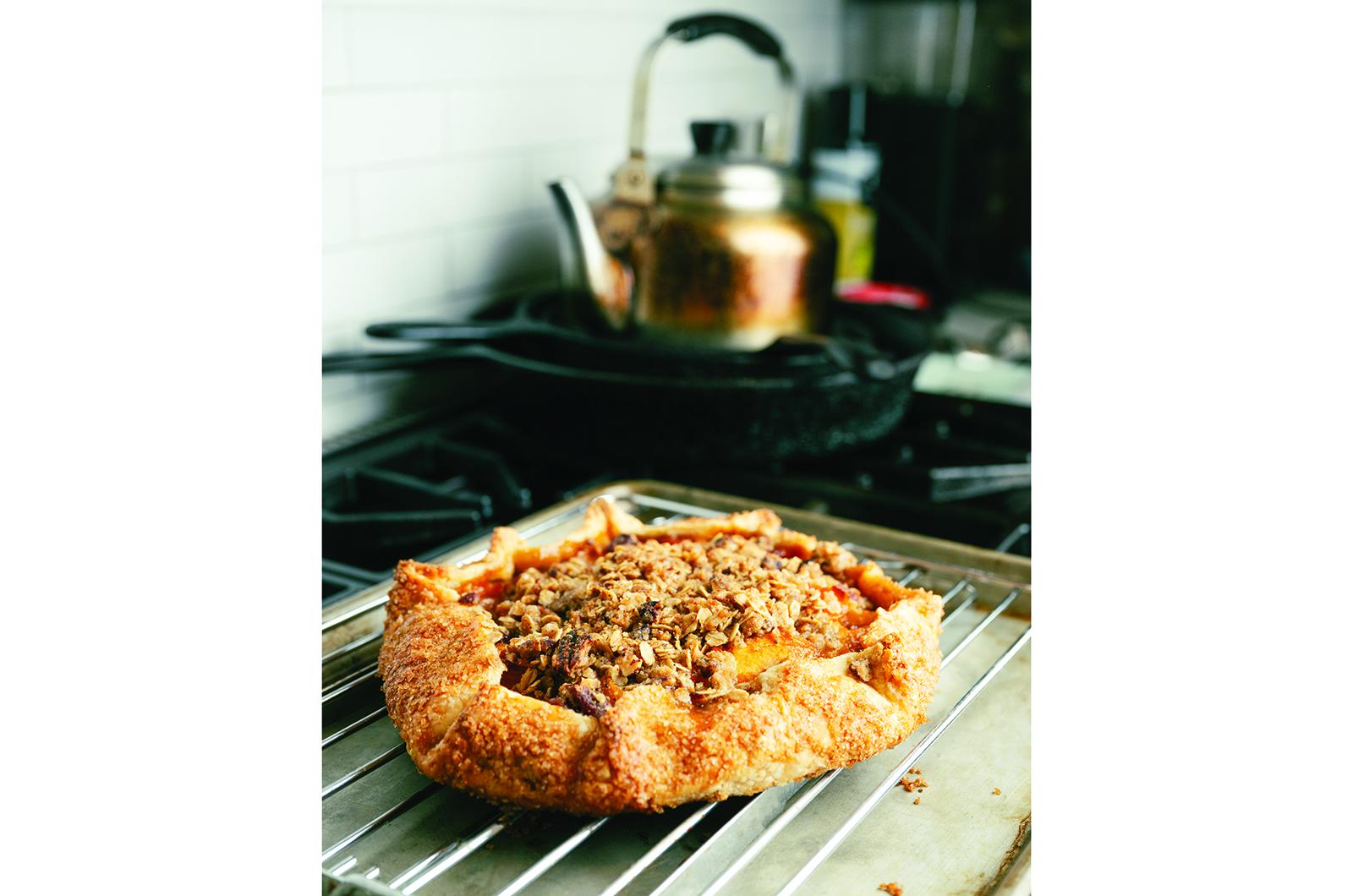
During our week together, peaches starred one night, blueberries another. Pie or tart? Leaning into our informal vibe, Claudia decided to forgo pans and make crostatas. She used her pie dough recipe, rolling it out on parchment paper then re-chilling it. She’d set the oven, then macerate the fruit using her go-to ratio: ten grams of sugar for every one hundred grams of fruit (always measured by weight; adjusted if the fruit is especially tart or sweet), plus a little cornstarch. When the oven was ready, she’d mound the filling on the dough, fold the sides up, and sprinkle them with crystallized sugar. Cooked on a metal sheet pan, the crostata would brown and crisp. She’d transfer it to a rack to cool, and an hour later we’d have dessert. It was a formula for wonderful summer evenings and an approach I now use on repeat all year round.
A seasonal resident of the Island, Catherine Young has collaborated on many award-winning cookbooks including Delectable: Sweet & Savory Baking (Random House, 2022) with Claudia Fleming; The Beetlebung Farm Cookbook (Little, Brown and Company, 2015) with Chris Fischer; Salt to Taste: The Key to Confident, Delicious Cooking (Rodale Books, 2009) with Marco Canora; The Anatomy of a Dish (Artisan, 2002) with Diane Forley; and Think Like a Chef (Clarkson Potter, 2000) and Craft of Cooking (Clarkson Potter, 2003), both with Tom Colicchio. She was an editor at Saveur magazine and cooked at leading restaurants including Gramercy Tavern, Lespinasse, Union Square Café, and Tribeca Grill.
The following recipes were published with this story:
Peach Crostata with Brown Butter Pecan Crumble