Every year Vineyard farmers bring us more and more new varieties of winter squash, many of them “mini” versions of bigger squash, making them perfect for single servings or stuffing. On Cook the Vineyard, we have lots of techniques and recipes for cooking squash, so if you’re at the market, don’t be afraid to try a new variety. In most cases, the smaller squash have perfectly edible skin so there’s no need to peel when roasting slices, wedges, or halves.
Sweet Sugar Dumpling: This variety is an evolution of Sweet Dumpling (see below), bred to have an exceptionally sweet flesh.
Sunshine Kabocha: An orange variety of the more common green kabocha, this squash is a little bigger than the rest here, but a smaller one will feed two nicely. It’s a great roasting squash with a fluffier, drier texture than some and a colorful, deeply flavored flesh.
Spaghetti Squash: After cooking, the pale flesh of spaghetti squash separates into fine strands that are perfect for making fritters or for sauteing and serving as a bed for stews. Cutting in half and roasting is the best technique for eliminating some of this squash’s excess moisture. A small one serves two. (They range in size quite a bit.)
Sweet Dumpling: With the markings of a delicata and light orange flesh similar in texture to an acorn squash, sweet dumplings have a sweet and tangy flavor that can use the addition of umami, like crispy shallots or sauteed mushrooms. The small size is perfect for a single serving.
White and Green Acorn: With a tender, slightly fibrous flesh and a complex nutty-sweet flavor, acorn squash varieties can be green, orange, white, and sometimes yellow. They are perfect both for stuffing and cutting into rings for roasting. One can usually serve two people.
Black Futsu: This captivating Japanese squash actually has edible skin and is well-worth roasting for its nutty and fruity flavor.
Robin’s Koginut: This newer variety (read about its origins here) has an exceptional flavor and dense, creamy flesh. It’s a cross between butternut and kabocha with the best of both. Very small ones are single servings, larger ones can serve three.
Mini Kabocha: Like other kabochas, these little ones are highly flavorful with a slightly drier texture than a butternut. They would be perfect for serving squash soup made from a bigger kabocha, but they are also delicious cut in wedges and roasted.
Honeynut, Butter Baby: The new generation of baby butternuts now encompasses several variieties which may or may not be labeled with the correct name. Never fear, they are all delicious and super quick to cook on a weeknight. No peeling needed.
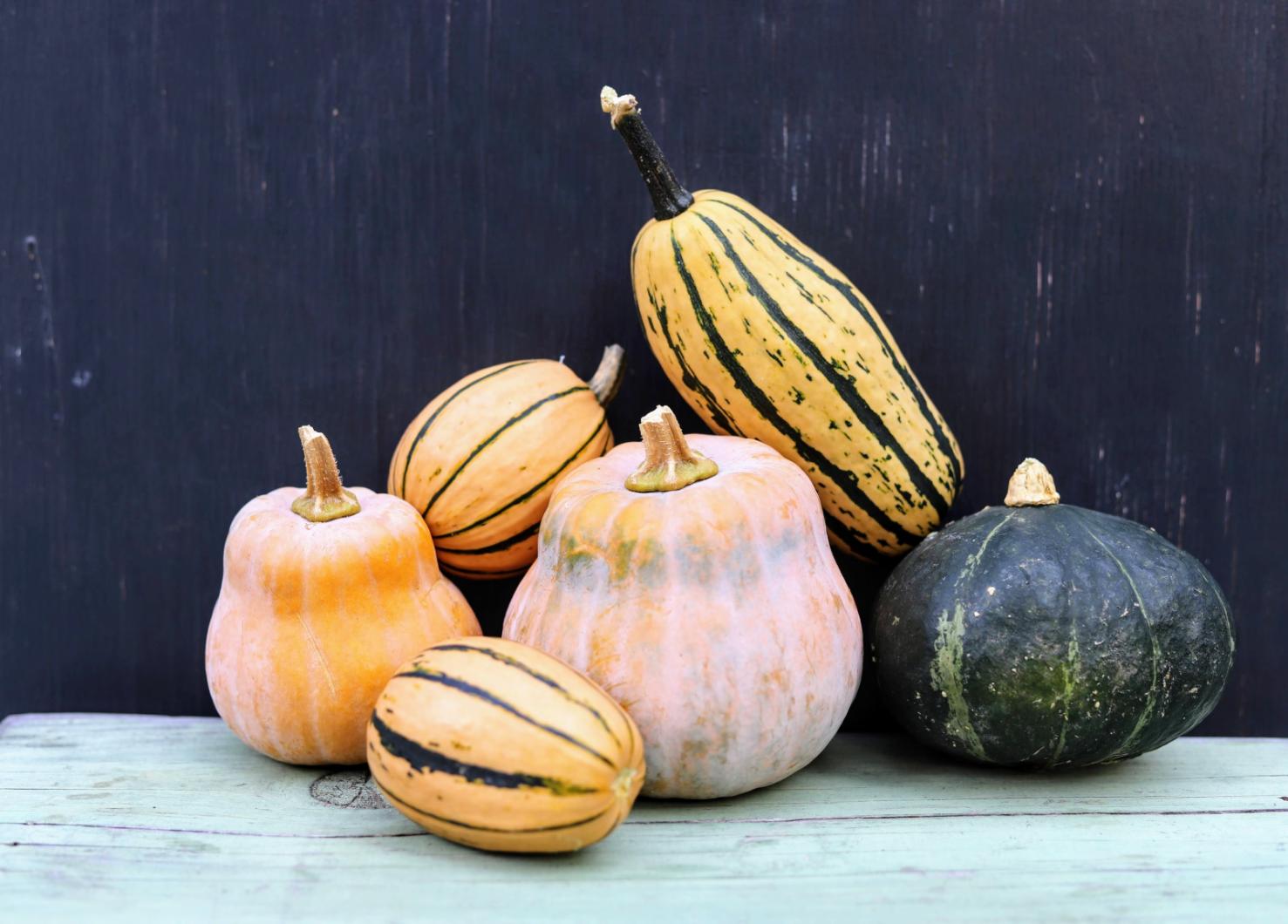
Delicata (the long striped squash in photo above): Cut in half, delicata makes two “boats” perfect for stuffing. But cut crosswise, the rings are delicious roasted and pretty in a warm grain dish. The flesh is cream, light, and bright tasting, with a very slight flavor hint of summer squash.